

What Is the Difference Between HSS and Cobalt End Mills
Choosing between high-speed steel (HSS) and cobalt end mills can affect cutting performance, tool life, surface finish, and overall machining cost. Although cobalt end mills are part of the HSS family, their higher cobalt content gives them greater resistance to heat and wear than conventional HSS.
The best choice depends on the workpiece material, material hardness, cutting conditions, machine capabilities, production volume, and tooling budget. For many general-purpose milling applications, HSS provides an economical combination of toughness and performance. When cutting temperatures and tool wear increase, cobalt HSS can provide a useful step up in performance.
Travers Tool offers a wide selection of cutting tools, including HSS and cobalt end mills from trusted manufacturers for manual and CNC milling applications.

HSS VS. COBALT END MILLS: WHAT IS THE DIFFERENCE?
The primary difference between standard HSS and cobalt HSS end mills is material composition and performance at elevated temperatures.
High-speed steel is an alloy containing elements such as tungsten, molybdenum, chromium, and vanadium. These alloying elements provide a combination of hardness, toughness, wear resistance, and heat resistance. HSS is also relatively tough and forgiving, making it a practical choice for a wide range of general-purpose milling applications.
Cobalt end mills are a type of high-speed steel with cobalt added to the alloy. The cobalt improves the tool's hot hardness, which is its ability to retain hardness and resist softening as cutting temperatures increase. This helps the cutting edge maintain its strength and wear resistance during more demanding machining operations.
The result is not simply a harder tool. Cobalt changes the balance of properties within the steel, providing improved resistance to heat and wear while retaining much of the toughness associated with HSS.
HSS VS. COBALT END MILLS AT A GLANCE
|
Characteristic |
HSS End Mills |
Cobalt End Mills |
|
Material |
High-speed steel |
Cobalt-alloyed high-speed steel |
|
Heat resistance |
Good |
Better |
|
Hot hardness |
Good |
Higher |
|
Wear resistance |
Good |
Higher |
|
Toughness |
Excellent |
Very good |
|
Typical cutting speed |
Lower |
Higher |
|
Tool cost |
Lower |
Higher |
|
Best suited for |
General-purpose milling |
More demanding applications |
HOW DO CUTTING SPEEDS COMPARE BETWEEN HSS AND COBALT?

The performance difference between HSS and cobalt becomes more noticeable as cutting temperatures, material hardness, and machining demands increase.
Standard HSS end mills generally perform well at moderate cutting speeds and temperatures. Cobalt end mills can withstand higher cutting temperatures and, depending on the specific tool, workpiece material, geometry, and cutting conditions, can generally be run at higher speeds than conventional HSS.
However, cobalt should not be considered a direct replacement for carbide.
Carbide end mills offer substantially greater hot hardness and wear resistance and are generally preferred when maximum cutting speed, productivity, or harder-material machining is the priority. Cobalt occupies a useful middle ground between conventional HSS and carbide, providing improved heat and wear resistance without the higher cost and brittleness associated with carbide.
Find the recommended cutting speed and feed rate for the specific end mill and workpiece material using the Industrial Milling Speed & Feed Calculator on our website.
WHEN SHOULD YOU CHOOSE HSS END MILLS?
HSS end mills remain a practical and economical choice for many milling operations. Their toughness makes them more forgiving in less-than-ideal setups, while their lower cost makes them attractive for general-purpose and lower-volume machining.

Consider HSS end mills for:
- Aluminum, brass, and many low-carbon and mild steels
- General-purpose milling on manual or CNC machines
- Lower-volume or short-run production
- Applications where toughness and flexibility are important
- Machining operations where cutting speeds are relatively moderate
- Shops where minimizing initial tooling cost is a priority
HSS can be particularly useful on manual milling machines, where the operator may need a tool that tolerates variations in feed, depth of cut, and machine rigidity.
WHEN DOES COBALT MAKE MORE SENSE?
Slightly darker in color, cobalt end mills become more attractive when heat, wear, or material hardness begins to push standard HSS toward its practical limits.
Their improved hot hardness and wear resistance can help the cutting edge maintain its performance in materials or cutting conditions that generate more heat.
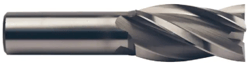
Consider cobalt end mills for:
- Harder steels and tool steels, particularly in the lower-to-middle hardness ranges
- Many stainless steel applications
- Cast iron and other abrasive materials
- Longer production runs where tool life and fewer tool changes matter
- Applications requiring higher cutting speeds than conventional HSS can efficiently support
- Machining operations that generate significant cutting heat
HOW DOES TOOL LIFE COMPARE?
Cobalt end mills often provide longer tool life than conventional HSS in applications that generate higher cutting temperatures or greater tool wear.

However, tool life depends on much more than tool material. Workpiece material, cutting speed, feed rate, axial and radial depth of cut, machine rigidity, tool overhang, coolant, and tool geometry all have a significant effect.
A standard HSS end mill generally costs less than a comparable cobalt tool. For short runs and less demanding applications, the lower initial cost can make HSS a better value.
For repeated machining of tougher or more abrasive materials, cobalt's higher purchase price may be offset by fewer tool changes, less downtime, and more consistent performance.
CAN HSS AND COBALT END MILLS BE RESHARPENED?
Yes. Both HSS and cobalt end mills can generally be resharpened when the tool's condition and geometry make resharpening practical.
Because cobalt end mills are still made from high-speed steel, they can be resharpened using processes similar to those used for conventional HSS tooling. This can make both materials attractive to shops looking to extend tool life and control tooling costs.
The economics of resharpening depend on the tool's original cost, condition, geometry, the number of times it was resharpened, and the cost of the sharpening service.
What Role Does Coolant Play? 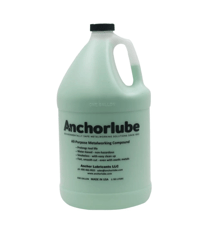
Proper use of cutting fluid and machining coolant can help both HSS and cobalt end mills perform more effectively.
Depending on the application, options may include Water Insoluble Cutting Fluids, Synthetic Machining Coolants, and Water Soluble Cutting Fluids, or other cutting fluids or lubricants recommended for the workpiece and tooling.
Coolant can help:
- Control cutting temperature
- Reduce friction
- Improve chip evacuation
- Reduce built-up edge
- Improve surface finish
- Extend tool life
HOW DO YOU CHOOSE BETWEEN HSS AND COBALT END MILLS?

Rather than choosing based solely on tool material, evaluate the entire machining operation, and ask:
- What material are you machining?
- How hard or abrasive is the material?
- How much heat will the cutting operation generate?
- What speeds and feeds can your machine support?
- How rigid is the machine and workholding setup?
- How many parts will you produce?
- Is tool life or initial tooling cost more important?
As a general rule, HSS is often the better choice for lower-speed, general-purpose, and lower-volume milling, particularly when toughness and low tooling cost are important.
Cobalt HSS is often the better choice when machining tougher materials, running at higher cutting speeds, or performing longer production runs where increased heat and wear resistance can improve tool life.
Neither material is universally better. The right choice depends on the complete machining application.
HSS VS. COBALT VS. CARBIDE
It can also be useful to view HSS and cobalt as part of a broader range of cutting-tool materials.
HSS offers excellent toughness and relatively low tooling cost. It is well suited to general-purpose milling and applications where cutting speeds are moderate.
Cobalt HSS provides improved hot hardness and wear resistance while retaining much of the toughness of HSS. It is a good option when conventional HSS is approaching its performance limits but carbide may not be necessary.
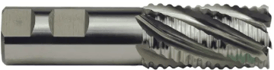
Carbide provides substantially higher hot hardness and wear resistance and can support much higher cutting speeds. However, carbide is generally more brittle and may require a more rigid machine, workholding setup, and machining process.
The goal is not to choose the most expensive cutting tool. The goal is to choose the tool material that provides the best combination of performance, tool life, and cost for the application.
KEY TAKEAWAYS
- HSS end mills are economical, tough, and versatile, making them well suited for general-purpose milling and moderate cutting speeds.
- Cobalt end mills are a type of HSS with added cobalt that improves hot hardness and resistance to heat-related wear.
- Cobalt HSS can generally tolerate higher cutting temperatures and, depending on the application, higher cutting speeds than conventional HSS.
- Cobalt can provide longer tool life when machining tougher, harder, or more abrasive materials or when cutting conditions generate significant heat.
- HSS often provides the best value for softer materials, lower-volume work, moderate cutting speeds, and applications where toughness and low tooling cost are priorities.
- Cobalt is often a good choice for tougher materials, higher cutting temperatures, longer production runs, and applications where reducing tool changes is important.
- Cobalt is not a substitute for carbide in every application. Carbide offers substantially greater hot hardness and wear resistance and is generally preferred for maximum productivity and high-speed machining.
- Both HSS and cobalt end mills can generally be resharpened, providing an opportunity to extend tool life and reduce tooling costs.
- Tool life depends on more than tool material. Workpiece material, speeds and feeds, depth of cut, machine rigidity, tool geometry, coolant, and tool overhang all affect performance.
- The best end mill is the one that provides the right combination of cutting performance, tool life, surface finish, and overall machining cost for the job.
PRO TIPS AND RELATED RESOURCES
When selecting an end mill, don't choose the tool material in isolation. Consider the workpiece material, hardness, machine rigidity, tool geometry, cutting parameters, coolant strategy, and production requirements together.
For demanding applications, manufacturers' cutting data should be used as the starting point for determining speeds and feeds. Adjustments may then be necessary based on machine condition, workholding, tool overhang, radial and axial engagement, and the stability of the setup.
Need help selecting the right end mill? Travers Tool offers HSS and cobalt end mills from trusted manufacturers, along with free technical support from experienced machinists. Whether you're selecting tooling for a manual mill or CNC machining center, the right combination of tool material and cutting parameters can help improve productivity, tool life, and machining results.
Download our guide on the fundamentals of end mills and learn the pros and cons of varying helix angles, coatings, tool materials, and more, so you can confidently select the end mill that best meets your needs and suits your application.
Troubleshoot what's killing your end mill, including chatter, breakage, welding, and more. Use our end mill troubleshooting guide to pinpoint and solve the problem you're experiencing.
Using the correct feeds and speeds helps you get the most from your milling tools. The right parameters can extend tool life, improve surface finish and accuracy, reduce tool wear and breakage, and increase productivity. To help you find a good starting point, use the Industrial Milling Speed & Feed Calculator on the Travers Tool website to quickly calculate recommended cutting parameters for your application.