


When accuracy, repeatability, and machine uptime matter, the right drill chuck and drill chuck arbor/shank combination make all the difference. Proper toolholding reduces runout, improves surface finish, extends tool life, and minimizes downtime, especially in production and precision environments.
Understanding Drill Chuck Adapter Tapers: JACOBS TAPER VS. MORSE TAPER
Drill chucks and machine spindles rely on self-holding tapers to transmit torque and maintain concentricity. The two most common are Jacobs Taper (JT) and Morse Taper (MT), each serving a distinct role in the toolholding system.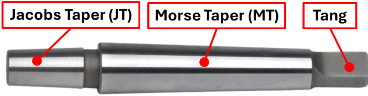
Installing and Removing a Jacobs Taper Drill Chuck Arbor
A Jacobs Taper (JT) is a self-holding taper used to mount drill chucks onto arbors. Proper installation is critical to prevent runout and slippage.
Installing a Jacobs Taper Drill Chuck
- Clean both tapers thoroughly
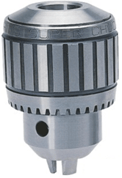
- Clean the chuck bore and arbor taper using solvent and a lint-free cloth.
- Even minor debris can introduce runout.
2. Align and seat the taper
- Carefully align the chuck and arbor.
- Press together using:
- An arbor press (preferred), or
- Light taps with a soft-faced mallet (never use a steel hammer).
Removing a Jacobs Taper from a Drill Chuck
Using Jacobs Taper Wedges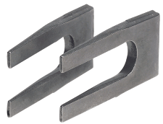
- Select wedges sized correctly for the taper.
- Insert wedges opposite each other between the chuck body and arbor shoulder.
- Apply even pressure in a vise until the taper releases.
Using a Drift Punch
- If the chuck has a through-hole, open the jaws enough to allow the punch to slide through them.
- Insert a brass drift punch through the jaws.
- Drive the arbor out with controlled force.
Installing and rEMOVING A Morse Taper Shank
Morse Tapers are widely used in drill presses and lathe tailstocks due to their self-locking design and high torque capacity.
You’ll need to know how to identify and determine the size of your Morse taper to get one that fits your spindle.
Installing a Morse Taper Shank into a Machine Spindle or Tailstock
- Clean the spindle socket and shank completely.
- Insert the shank with a slight twist to ensure proper alignment.
- Ensure the tang engages the spindle slot where applicable.
- Seat fully using firm, straight pressure.
Removing a Morse Taper Shank

- Locate the drift slot in the spindle or tailstock.
- Insert the correct Morse taper drift wedge.
- Apply a sharp, controlled tap on the drift wedge to eject the shank.
DRILL CHUCK COMPARISONS: KEYED AND KEYLESS DRILL CHUCKS, SENSITIVE DRILL CHUCKS, AND INTEGRATED-SHANK DRILL CHUCKS
Keyed Drill Chucks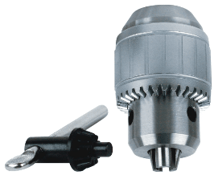
Best for: Key-type drill chucks are the better choice for heavy drilling, high torque, and tapping operations.
Maximum gripping force, but tool changes are slower.
Common applications:
- CNC machines
- Milling machines
- Drill presses
- Lathes
Keyless Drill Chucks
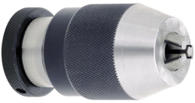
Best for: Keyless drill chucks are preferred for manual machines, production environments, and frequent tool changes.
- Faster tool changes reduce downtime.
- Torque capacity varies by design and quality.
- Not recommended for lathe tailstocks while using drills larger than 1/2".
Buyer tip:
When keyless drill chucks are used to start a tap, reversing the spindle will often cause the chuck to release, leaving the tap in the partially threaded hole.
Sensitive Hand-Feed Drill Chucks
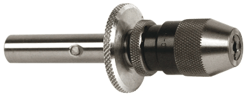
Best for: Sensitive hand-feed drill chucks work very well for very small-diameter hole drilling and precision work.
- Light feed pressure
- Excellent tactile control (“feel”)
- Limited torque capacity
Ideal applications:
- Electronics
- Toolrooms
- Watchmaking
- Fine mechanical work
Integrated-Shank Drill Chucks
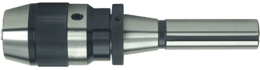
Integrated-shank drill chucks are drill chucks manufactured as a single, one-piece unit with the shank permanently built into the chuck body, eliminating the traditional two-piece system (chuck + arbor) and creating a more rigid, accurate assembly.
Benefits:
- Greater Accuracy (Lower Runout)
- Increased Rigidity
- Improved Strength and Torque Transmission
- Better Balance at Higher Speeds
- Reduced Maintenance
Selecting the Right Drill Chuck and Shank
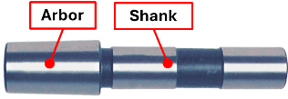
When choosing a drill chuck arbor/shank, consider:
- Both minimum and maximum drill capacities
- Required runout tolerance
- Torque and material demands
- Frequency of tool changes
A properly matched chuck, arbor, and taper ensure optimal performance and tool life.
Where to Spend and Where to Save
Spend More On:
- Keyless drill chucks (quality matters most here)
- High-precision applications
- Production or high-use manual machines
- Arbors and tapers (lower-quality arbors introduce runout)
Save Money On:
- Occasional-use keyed drill chucks
- Non-critical maintenance drilling
- Low-speed, low-torque operations
Buyer tip:
A premium drill chuck mounted on a low-quality arbor defeats the purpose. Always balance the entire toolholding system.
How to Identify Your Shank Type, Size, and Jacobs Taper Arbor
Correctly identifying the type and size of your shank, along with the proper Jacobs Taper arbor, is essential to ensure you order the right tool the first time, minimizing downtime and eliminating unnecessary returns or guesswork.
-
Click here to watch a step-by-step video demonstrating how to determine the size of your Morse taper. The video walks through measurement techniques and key identifying features to help you confirm the correct taper designation.
-
Below, you’ll find a downloadable and printable Taper Dimension Chart. This comprehensive chart includes specifications for:
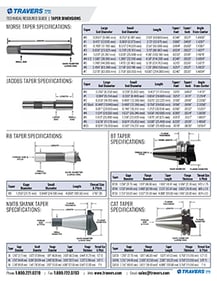
- Morse Tapers
- Jacobs Tapers
- CAT Tapers
- R8 Shanks
- Additional common spindle and arbor styles

If you’re unsure about your measurements, the Travers Tool Co. technical team is always available to assist in matching the correct shank and arbor for your application.